Cruise America Review

- Fleet vs. Marketplace: Comparing Cruise America vs RVshare - July 20, 2026
- Cruise America Review - June 30, 2026
Throughout my life, some of my favorite memories have come from good old-fashioned road trips. My dad was always the one getting us into the car or van and convincing us the long drive would be worth it, even when it didn’t feel that way at the time. While we never did the RV version when I was a kid, I did dive into it when I became a dad. I have owned and rented a few different rigs over the years. It’s been a minute, however, and my kids are now teenagers. Before they turn into adults and leave the nest, I thought this summer was a good time to give it another go!
For this trip, I rented a Cruise America RV and took it on a multi-day road trip with my two teenagers and our one-year-old puppy. While I’m not brand-new to RV travel, I wanted to look at the experience the way a newer renter would: How easy is the booking process? What happens at pickup? How hard is the RV to drive? What is it actually like to live in for a few days? And how much does it really cost once add-ons, fuel, fees, and the deposit are factored in?
This Cruise America review walks through the full Cruise America rental experience, from research and booking to pickup, driving, daily RV life, and drop-off. Cruise America made a lot of the process simple and approachable, but there were a few things I’d do differently next time, especially when it comes to RV size, packing, and campground choice.
Why I Chose Cruise America
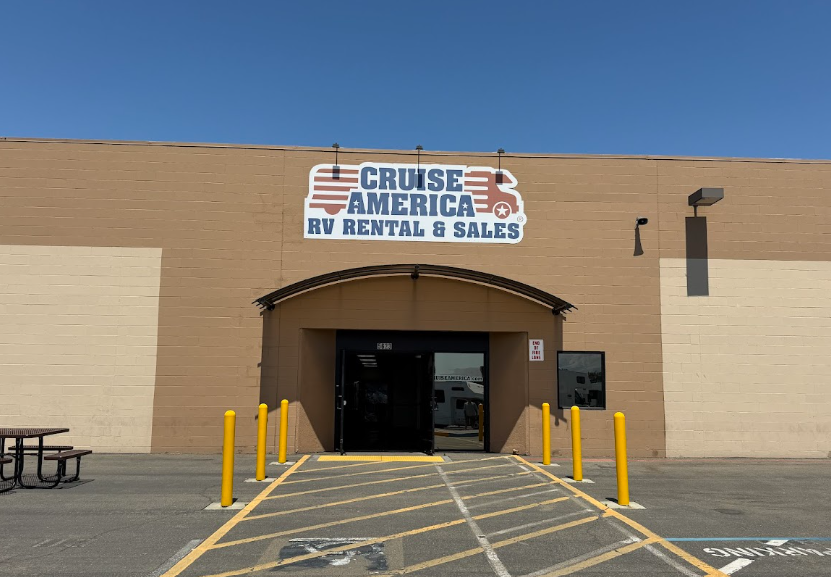
In 2026, there are a lot of options when it comes to renting a rig. Some options are basically the RV version of Airbnb, where you can rent directly from an individual owner. That can work well, but for this trip, I felt better renting from a company like Cruise America. For a newer RV renter, there is real comfort in going through an established company with a standardized fleet, clear pickup process, and support if something goes wrong. Renting from an individual can bring in more variables, and I didn’t feel up for that this time around.
I was already familiar with Cruise America and had been for a long time, as I’d seen their units in my prior travels. I did look at some other options, but ultimately chose Cruise America for a few reasons:
- They had a location near my house
- They offered a few different sizes
- The costs were in line with, or better than, what I was finding elsewhere
Once I decided on Cruise America, I went to their website (CruiseAmerica.com) and started comparing what was available for my pickup location and travel dates. The site makes you choose your pickup location and dates first, then shows which RVs are available.
When you look at the Cruise America fleet, you are essentially presented with several primary choices for family trips:
- The Ultra Compact (19’): Designed for couples
- The Compact (19’–21′): Designed for small families or couples.
- The Standard (25′): The classic mid-size tier meant to balance maneuverability with living space.
- The Large (30′): The largest motorhome option, designed for larger groups who prioritize square footage over ease of parking.
- Travel Trailer (20’): Best option for someone with a tow-capable vehicle who wants to use that vehicle separately once they arrive.
It’s important to note that not every RV type is available at every Cruise America location. Simply put in your pickup location from the dropdown of available sites, as well as your pickup and drop-off dates, and the site will automatically present your options.
For my rental, I had my two teenagers, ages 15 and 17, and our one-year-old puppy. I also knew I’d be doing some difficult mountain driving. I opted for the 21-foot Compact RV. On paper, the math made sense. It claimed to sleep up to four people, would likely provide easier handling for challenging driving, and its footprint seemed less intimidating for navigating tight coastal switchbacks or standard gas stations.
Booking the RV and Reviewing the Real Costs
I entered my dates, number of passengers, and pickup location, and the site showed me the available units. The website also highlighted an unlimited mileage promotion, which was great and another factor in my decision to go with Cruise America.
I found the costs varied depending on dates and location, but overall the costs were reasonable, especially when compared to getting a hotel room. Interestingly, smaller does not always mean cheaper. The cost of renting the smaller, 21-foot Compact unit was actually higher than the larger options during some of the dates I considered. This may be driven by simple supply and demand: first-timers frequently flock to the smallest vehicle out of driving anxiety, allowing the rental agency to command a premium for that peace of mind. Ultimately, I settled on dates where the smaller unit was slightly less expensive.
Once I selected my criteria, I was presented with another screen where I could add a few optional extras:
- Estimated Trip Distance: The per-mile rate was $0.39 but was entirely waived because of the unlimited mileage promo.
- Kitchen Kit: For $125, Cruise America provides all the needed cookware, utensils, broom, bottle opener, and other basic kitchen items.
- Personal Kit: For $75, Cruise America provides towels, washcloths, a pillow, a comforter, a bed sheet, and a dish towel.
- Zero Damage Plan: For $24.95 per night, you can add coverage intended to protect you from damage charges. Without this, I would have been responsible for up to $3,000 in damage to the vehicle.
- Prepaid Disposal & Propane: For $39 each, you can have Cruise America empty your gray and black water tanks or refill the propane. There are more details around this, which should be discussed at pickup.
I opted into all of the above because I wanted to keep the trip simple and make sure we had what we needed.
Cruise America is offering 50% off its standard per-mile rate on all motorhome sizes at every U.S. and Canada location, for departures between November 1, 2026 and October 31, 2027. Book with code FRDM, and enjoy a fully refundable $300 deposit with free cancellation up to 7 days before departure. Not valid on one-way rentals or combinable with other offers.
Local Renter Tip: If you are picking up an RV within driving distance of your home, bring your own gear. Paying for sheets, towels, and basic kitchenware is a steep convenience expense when you may already have those items at home. That said, these packages are a lifesaver for international travelers or out-of-state fly-and-drive renters who can’t pack a comforter in a suitcase. If you have a linen closet at home, use it and keep that cash in your fuel budget.
Once I had all my details selected, the site showed me the total cost summary. One additional note: there was a $50 prep fee and a $500 refundable deposit in the cost breakdown.
After reviewing the cost details, I hit the checkout button, entered my contact and payment information, and reserved the RV. All done.
The overall cost for my rental was approximately $275 per night with the options I selected, including the Personal Kit, Kitchen Kit, and Zero Damage Plan.
The Cruise America Pickup Process
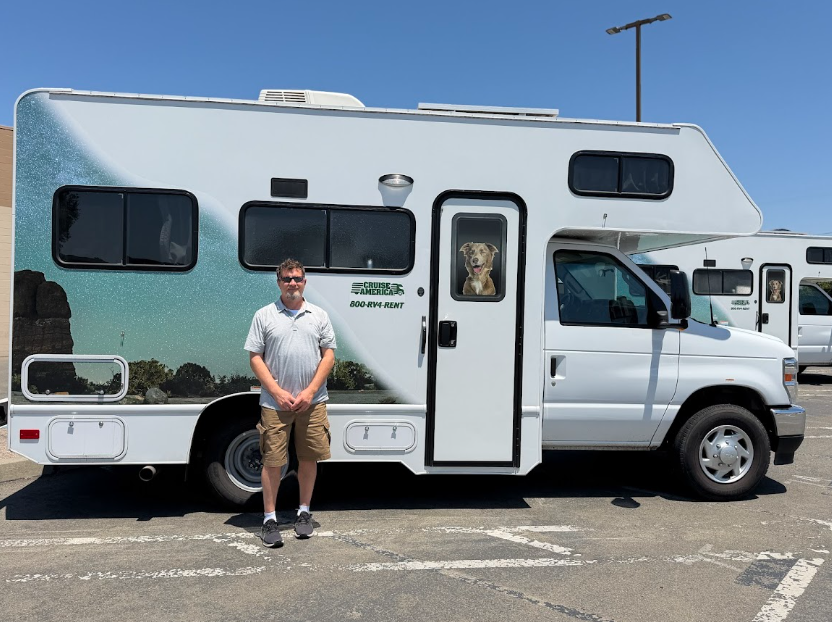
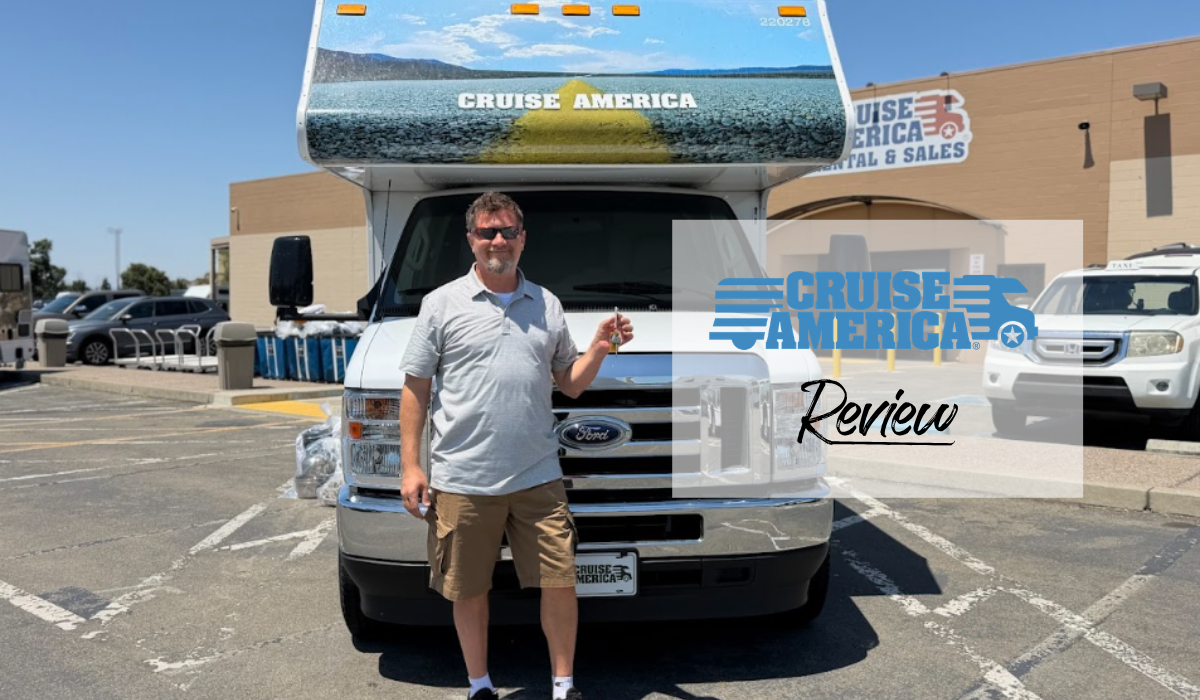
We picked up our RV at the Cruise America location in Newark, California, in the East Bay. The lot was filled with Cruise America’s recognizable blue-and-white vehicles, complete with large vinyl graphics of national parks on the sides. While it clearly identifies you as a vacationer rather than a local, the sheer uniformity of the fleet is actually reassuring. Seeing so many identical, well-maintained units makes it obvious that this is a proven, highly reliable system that has been successfully road-tested by thousands of families before you.
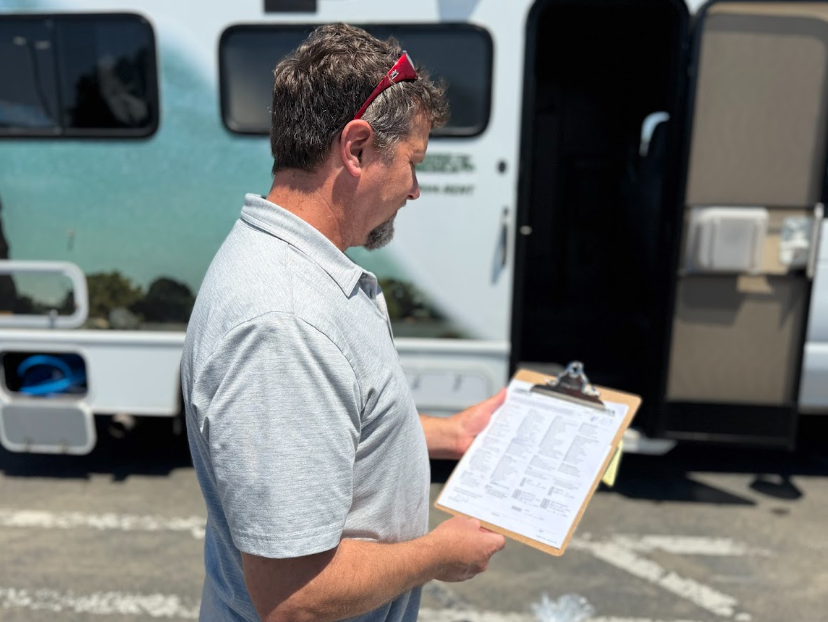
The staff at the Newark location were incredibly friendly, professional, and efficient. The facility was busy but not crowded, and I was greeted right away when I walked to the counter. They retrieved my reservation, confirmed what I had booked, walked me through some more details about the Zero Damage Plan, and informed me that there was no pet fee. They did explain that I could be responsible for additional cleaning fees if my dog left a lot of fur behind (or worse). Similar to renting a car, I had to initial and sign a few acknowledgments before heading out to the RV.
After the paperwork was complete, I was brought into a small room to watch an instructional video. The video took about 6-7 minutes and was very helpful for acclimating me to the unit. If you are new to RV rentals, I’d ask where you can find that video online, because it covers a lot and may be useful to revisit during the trip.
After the video, the staff member brought me out to the RV and helped me grab my personal and kitchen kits. The RV was very clean and matched what I expected from the website. She checked the unit, then walked me through the exterior compartments, the interior features, and the control panel, which is important for operating and monitoring most of the RV-specific systems.
Once the walkthrough was finished, she asked if I had any questions and handed me the keys. Even with some RV experience, I found the pickup process useful. It is a lot of information to absorb at once, and I still felt a little nervous driving off the lot.
First-time renter tip: I highly recommend asking a lot of questions during pickup and the walkthrough. If you are unsure about the generator, water pump, tank disposal, hookups, propane, or control panel, get clarity before you leave. It is much easier to ask while you are standing there with the staff than to figure it out later at a campground. Cruise America also has online resources and an 800 number, so it is worth asking the staff which resources to use if questions come up during the trip.
What It Was Like to Drive the Cruise America RV
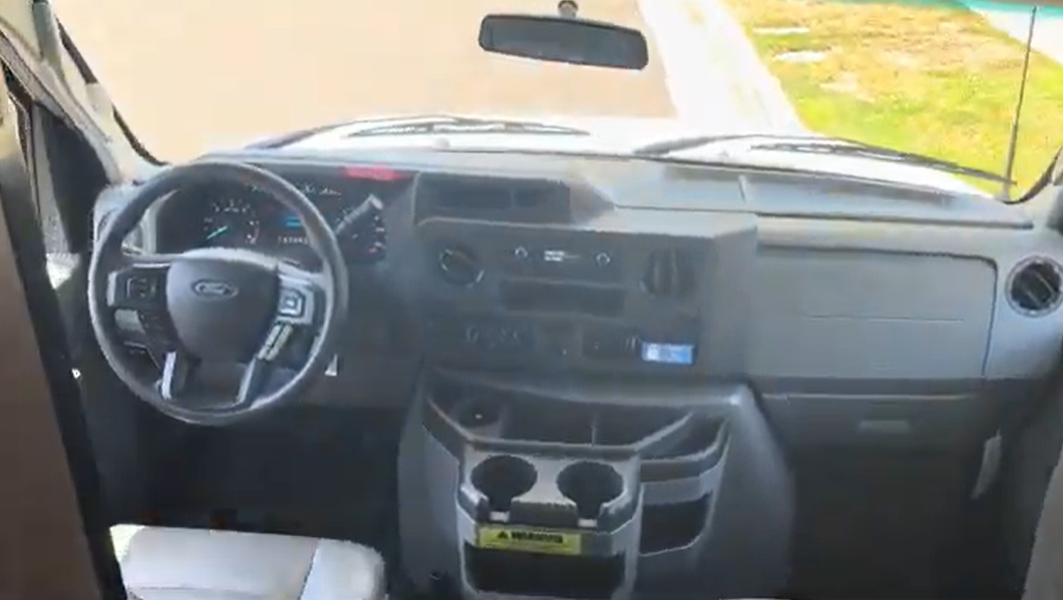
One of the main reasons I selected the 21-foot Compact RV was ease of driving. I realized quickly that it was just that: easy to drive. It basically felt like driving a large SUV, pickup truck, or small moving truck. This isn’t really surprising, as you are basically driving a Ford truck, in terms of the actual cab, engine, etc.
A few things stood out:
- Handling: To my immense relief, driving the RV was no more difficult than maneuvering a regular truck. It tracked straight, the steering was responsive, and it didn’t feel like it was actively trying to wander out of its lane on the highway.
- Sightlines and mirrors: You do not have a rearview mirror inside the cab because the living space completely blocks the back window. That means you are fully dependent on the side mirrors. This requires a quick mental adjustment: you must learn to check your mirrors constantly, visualize your blind spots, and make wider turns to ensure your rear dual wheels don’t clip a curb or a gas pump.
- Wind impact and stopping distance: When an eighteen-wheeler passes you at 70 mph, or when you hit a stiff crosswind, you will feel the RV move slightly. It requires a firm, two-handed grip on the wheel and a conscious decision to slow down. Furthermore, the vehicle is heavy. You cannot tailgate; your stopping distance is significantly longer than a standard sedan, requiring you to read the road three or four cars ahead.
- Fuel Economy: The gas mileage is not objectively great, but that is going to be true of most RVs. These vehicles do carry a lot of weight and aren’t built for aerodynamics. One saving grace is that the engine runs on standard 87-octane regular unleaded gasoline. I estimated that we got about 10 mpg during the trip.
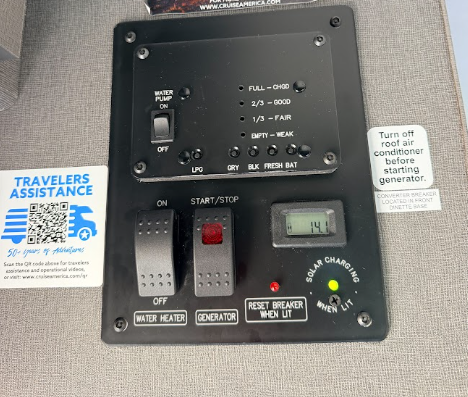
For a first-time RVer, the mechanical side of the vehicle can feel incredibly overwhelming. You aren’t just driving; you are managing a miniature, self-contained municipal utility grid. I like to think of an RV in three different operating modes: driving, parked, and camped.
Driving: When moving, there isn’t much tech to worry about. The propane tank (which should be valve open except when gassing the vehicle) will automatically keep the fridge cold. You can turn the water pump on if one of your crew wants to use the restroom or shower. But since it’s unlikely you’ll want to cook while moving down the highway, you really don’t need to think much about the control panel or powering things.
Parked: This mode, in my mind, is when you are stationary somewhere that is not a campground with hookups. In this state, the RV is fully functional, but how you manage things is a bit different than when hooked up at a camp. Propane, battery power, and the generator each handle different parts of the RV. Propane can power things like the stove, heat, hot water, and fridge, while the generator is needed to run the air conditioner, standard outlets, and microwave.
Camped: When hooked up to power and water at a campsite, you can avoid using the generator all together and you reduce usage of propane as the fridge automatically switches over.
The control panel in our unit was pretty intuitive. Turning on the generator, water pump, and water heater was as simple as pushing a button or switch. If I forgot to use the panel correctly, I was pretty much reminded by whatever we were trying to use. For example, if the water pump was off and someone flushed the toilet, the toilet wouldn’t refill. Or, if we didn’t have the generator running when we weren’t hooked up to power and tried to charge a phone in one of the outlets, it wouldn’t charge.
The monitors on the panel were easy to understand, so it was simple to keep track of when we needed to empty the gray and black water tanks, when our fresh water tank was low, or how we were doing on propane.
From my perspective, for shorter trips of two to three days, even if you aren’t going to have access to a full-hookup campsite every night, you likely won’t run into major issues with propane or water. For longer trips, you’ll want to get to a campground to refill water, connect to power, and dispose of your gray and black water.
Living in the Cruise America Compact RV
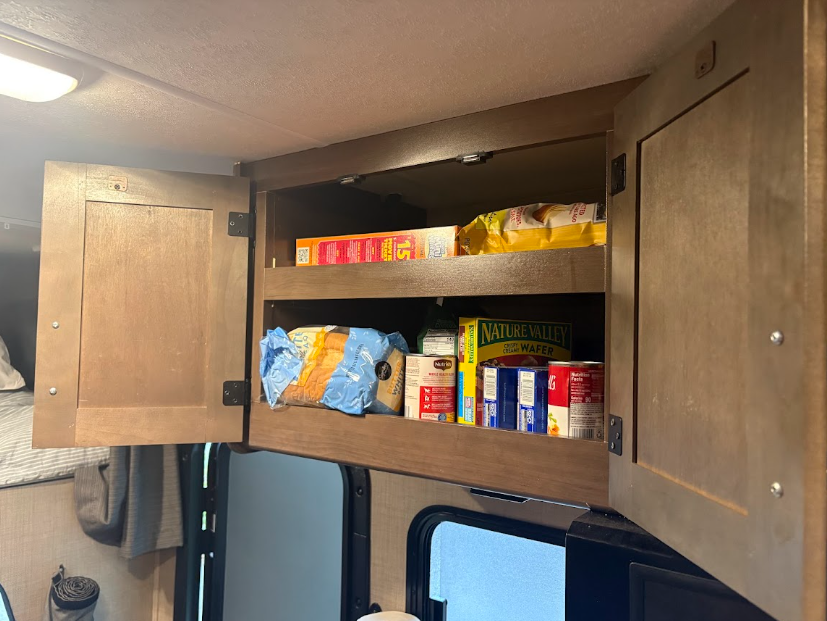
The RV I owned several years ago was a 30-foot unit. While that rig was quite a bit larger than the Cruise America RV I rented for this trip, the bigger difference was my kids’ age and the addition of a 60-pound pup. As most RV users will tell you, living multiple days in any unit requires some adjustment when it comes to cohabitating with loved ones. That said, the Cruise America RV had everything we needed from a functional standpoint, and all of the features worked as designed.

I picked the kids up at home after getting the RV, and they were excited because they had fond memories of our previous RV trips. They packed light, and since we had planned a few meals in advance, I already had groceries ready to go. We loaded our clothes, food, board games, dog supplies, and the dog herself without much trouble. Despite the RV’s smaller size, the interior storage was sufficient and well thought out, and the kitchen kit came with everything we ended up needing.
The kitchen was small but usable. Cooking inside the kitchen is entirely possible, but it requires a minimalist approach. The compact unit had a gas range, a microwave, and a capable refrigerator. Counter space was limited, so preparing a meal meant using the dining table as a prep station, cooking only a few things at a time, and washing dishes quickly so clutter didn’t take over the cabin. As long as you plan meals ahead, this unit is more than capable of letting you prepare and serve meals for your family. The microwave came in handy for snacks and side dishes, and the stovetop worked well for main courses. This unit did not come with a freezer, though I noticed the larger Cruise America rigs do. While that would have been nice to have, we managed just fine without one for a few days.
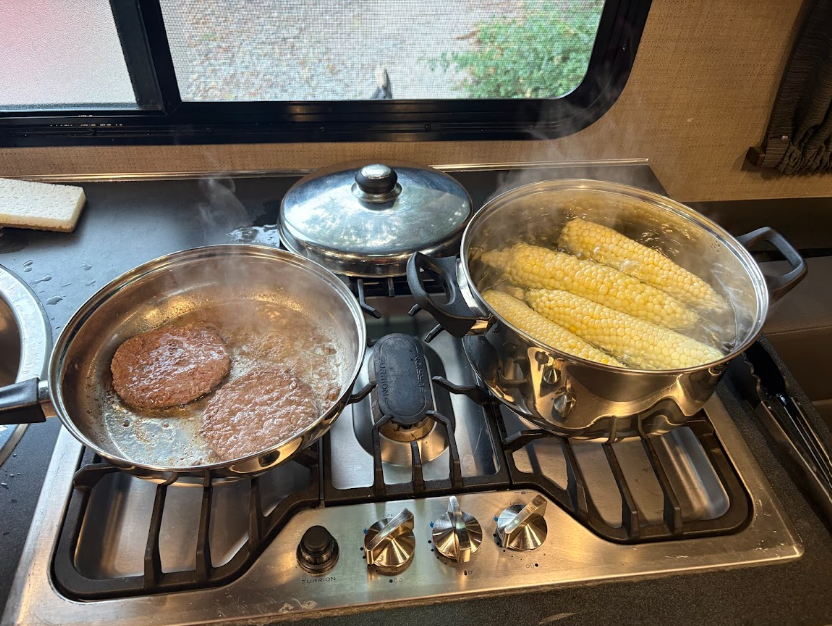
Planning tip: Carefully think through your meal plan before the trip. The small extras can sneak up on you. For example, we made corn on the cob one night, but I forgot the salt and pepper. It is worth thinking through not just the main food items, but everything you’ll want on everyone’s plate for each meal.
We spent the first day driving and stopping at the beach in Santa Cruz. The RV handled the mountain roads, coastal driving, and parking lots without much trouble. You need more space than you would in a regular car, but most lots were manageable. When we were parked, switching into “parked” mode was simple. Running the generator when needed was straightforward and gave us access to the features we wanted to use. My kids were able to shower after the beach, the water heater worked well, and everyone could use the restroom as needed. I made lunch while they had some fun on the coast. The bathroom in this unit is definitely small, but it was practical, and every inch served a purpose.
Sleeping worked better than I expected. The unit had two main sleeping areas:
Main sleeping area: The back of the RV had a table and seating area that converted to a flat bed surface that felt slightly smaller than a queen bed once set up. The conversion from table to bed, and back again, was easy and took only a minute or two. Once made with the items provided in the personal kit, the space was great for me and the puppy to sleep comfortably.
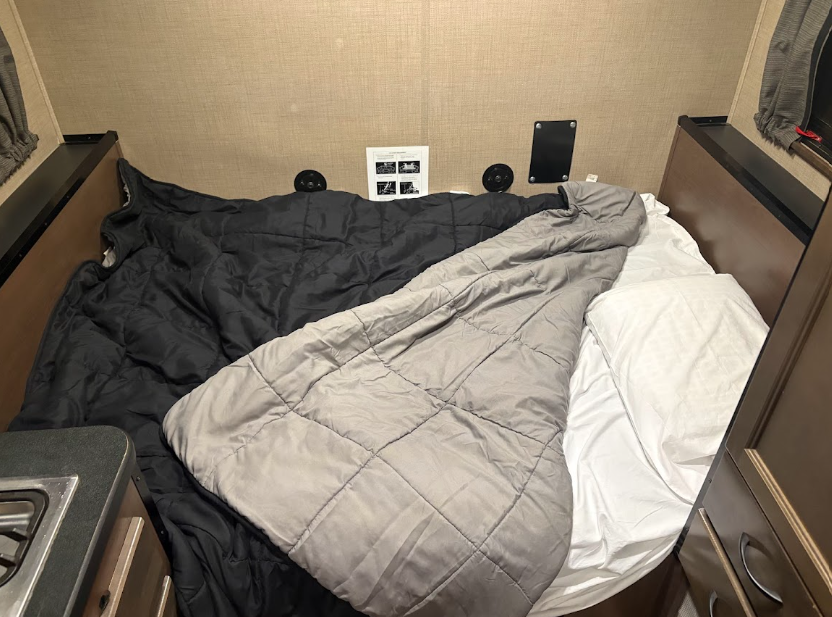
Overhead loft: Above the driver’s cab, there was another sleeping space. It was also easy to set up, since it really just required putting one cushion pad in place. This space felt slightly larger than the main sleeping area in the back, and my two teenagers found it plenty big enough, which says something for those two. You’ll need a second personal kit if you want to set up both sleeping spaces.
Both spaces had enough cushion for us to sleep well.
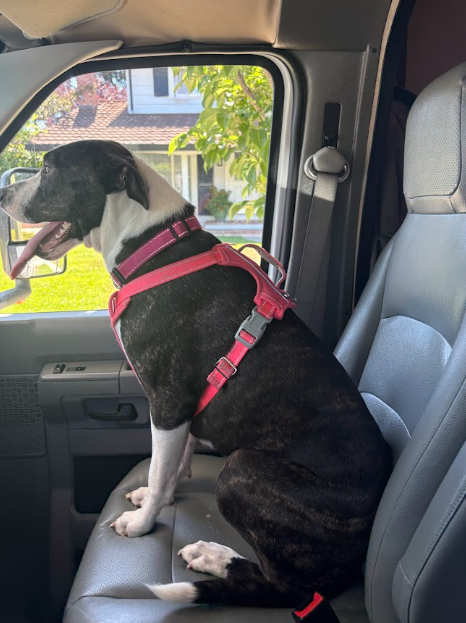
The puppy was the biggest space challenge. Bringing her along sounded great in theory, but it added another layer of complexity to an already compact setup. Our puppy was noticeably stressed by the new vehicle at first, and it took some time to coax her inside and help her settle once we were on the road. She seemed unsure where her spot was and spent a lot of time in the passenger seat next to the driver. Once we stopped for the night, she did better and enjoyed sleeping in the back once that space was converted to a bed.
The bigger issue was floor space. Inside a compact RV, a dog takes up premium real estate. When she was lying in the main walkway, the path through the RV was basically closed. Campgrounds also have leash rules, so she could not simply roam around outside while we sat by the fire. For an older, calmer dog, that might have been easier. With an energetic puppy, it was one more reason I wished we had rented the larger unit.
One thing I’d plan more carefully next time is the campground. This was not a Cruise America issue, but it did affect the overall RV experience. The RV itself hooked up without much trouble: the water hose was clean and easy to use, the power cable worked well, and the systems did what they were supposed to do. The only small hiccup was the sewer hose, which was a little short for the way our campsite was laid out, so we had to reposition the RV to make the connection work. Next time, I’d spend more time choosing a campground with strong reviews, well-maintained hookups, and enough space around the site.
Overall, the 21-foot Compact RV gave us what we needed for a short family trip. It was functional, thoughtfully laid out, and easier to manage than I expected. The only real issue was that our crew (two teenagers, one adult, and a dog) was probably asking a little too much of the compact floor plan. Next time, I’d rent the 25-foot Standard unit for the extra breathing room, but I still came away impressed by how much Cruise America fit into the smaller RV.
Returning the RV: Cleaning, Fuel, and Deposit
After days on the road, the return process can feel a little nerve-racking. You worry about hidden damage fees, cleaning penalties, or unexpected charges once the RV is inspected.
Fortunately, the drop-off process back at the rental lot was super easy and remarkably transparent. Cruise America operates a highly streamlined return, provided you handle the basics before arriving at the gate.
To avoid extra charges, there were three main things we needed to do:
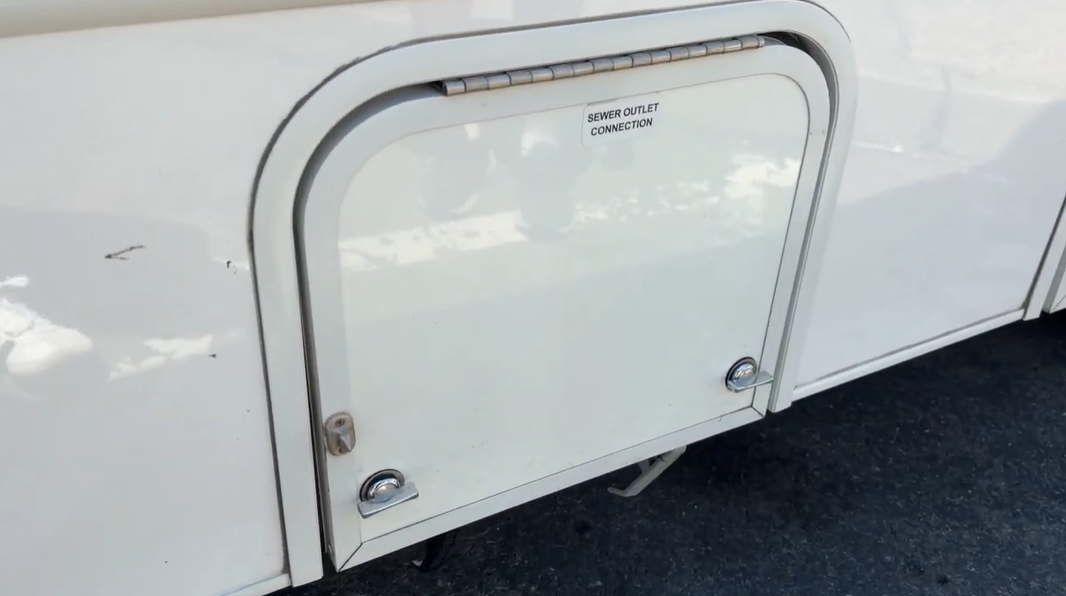
- Empty the tanks: You must dump both the gray and black water tanks at a campground or a designated dump station before handing over the keys, unless you prepaid for Cruise America to handle it.
- Refill the fuel: The vehicle must be returned with the same level of gasoline it had when you departed (usually a full tank).
- Basic interior clean: You don’t need to detail the vehicle, but you do need to sweep the floors, remove all your personal items, empty the fridge, and wipe down the surfaces.
Because we returned the vehicle clean, fueled, and empty, the final billing statement matched our expectations perfectly. There were no surprise fees, and our $500 security deposit was processed for release without any issues.
Final Verdict:
Cruise America delivered exactly what it strives to: a functional, highly standardized, accessible entry point into the world of RV travel. I was able to bypass the issues I had with ownership, including depreciation, storage, repair costs, and general wear and tear, while still enjoying the best parts of RVing. My kids enjoyed discovering new parts of California and, though they won’t admit it, spending a few days with me.

One of the reasons I booked with Cruise America was this exact deal: no mileage charges, no matter which motorhome you pick or where you rent from. Use code FRDU for departures through October 31, 2026, and you can cancel up to 7 days out with no penalty — low-risk way to lock in a great rate.
Would I rent from Cruise America again? Yes, absolutely. The ease of the whole experience was one of the biggest selling points. But I would change my strategy. For another family trip with teenagers and a dog, I would rent the 25-foot Standard unit instead of the Compact. And if I were doing another local trip, I’d bring my own linens and kitchen gear from home. The kits were convenient and would make a lot of sense for someone flying in or traveling from out of state, but as a local renter, I’d rather put that money toward fuel or campground costs.
For a family that wants a simple, approachable way to try RV travel without committing to ownership, Cruise America is an option I’d highly recommend.